


 فارسی
فارسی
HLA typing
HLA typing or determining the type of human leukocyte antigen (HLA) includes molecular or serological typing of blood leukocytes to determine HLA-A, -B, -C (MHC class I) and HLA- DR, DP, DQ (MHC class II).
In fact, HLA typing is a process that identifies HLA molecules expressed on the surface of cells in the human body. HLA genes are highly variable and this results in many different HLA antigens or molecules.
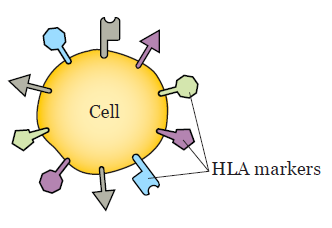
HLA typing is used to match patients and donors for bone marrow or cord blood transplants. HLAs are proteins or markers found on most cells in the body. The immune system uses these markers to determine which cells belong to your body and which do not. Therefore, one of the main applications of HLA typing is to identify the best recipient and donor match before hematopoietic stem cell transplantation.
A close match between donor and patient HLA markers is essential for a successful outcome of bone marrow stem cell transplantation. HLA matching promotes the growth and development of new healthy blood cells (called the graft) and reduces the risk of a post-transplant complication called graft-versus-host disease (GVHD).
Half of a person’s HLA markers are inherited from the mother and half from the father, so any sibling with the same parent as the patient has a 25% chance (1 in 4) of being a very close HLA match. Extended family members are unlikely to have close HLA matches. About 70 percent (7 out of 10) of patients who need a transplant do not have an identical donor in their family.
Research has shown that the donor must match at least 6 HLA markers. In many cases a closer matching is required. The best matching is determined through careful HLA testing. Because some HLA types are more common than others, some patients may have more of a challenge finding a matching donor. Some HLA types are more common in certain racial and ethnic groups.
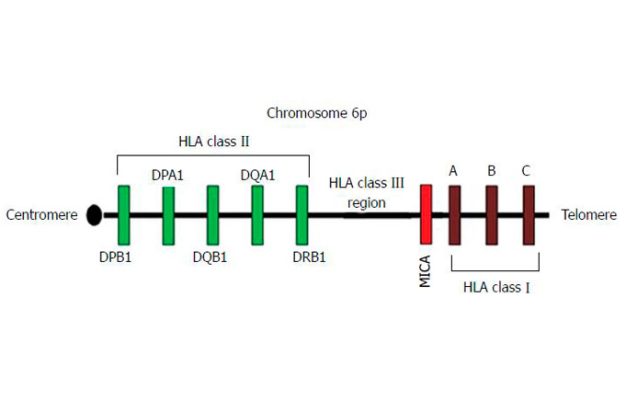
HLA grouping
HLA antigens are divided into groups that are identified by letters. For example, HLA-A, -B, and -C are HLA class I molecules and are found on all nucleated cells, including T lymphocytes. HLA-DQ and -DR are class II molecules that are distributed on fewer cell types such as B lymphocytes, macrophages, and endothelial cells. In addition to HLA class I molecules, these molecules are HLA Typing to minimize the risk of transplant rejection. Subsections of each group (individual gene specificity) are indicated by numbers HLA-A 1 or HLA-DR 4 is a combination of molecules on the surface of cells that is genetically determined and gives an HLA type. Each person inherits one HLA antigen from each group, and from each of their parents, so an individual HLA type may be, for example:
HLA-A 1, A25; B8, B44; Cw5, Cw7; DR 4, DR 17; DQ 2, DQ 7.
HLA typing methods
HLA typing methods are usually characterized by low, medium, and high resolution depending on their power to distinguish between HLA alleles.
Low resolution – a result at the antigen level such as serological methods, which forms the first field of the HLA nomenclature, for example A01; A02. .
Medium Resolution – A DNA-based typing result that includes a subset of alleles that share the digits of the first field of their allele name. Currently, HLA typing with moderate resolution, including SSP- (Sequence Specific Primer), SSO- (Sequence Specific Oligonucleotide), SSOP (Sequence Specific Oligonucleotide Probe), RFLP-PCR (Restriction Fragment Length Polymorphism Polymerase Chain Reaction) are performed.
High resolution – defined as a set of alleles that encode the same protein sequence at the antigen recognition site. Some high-resolution typing methods can also include sets of alleles that identify and encode the same protein sequence for the antigen-binding domain of an HLA molecule, and exclude alleles that are not expressed as cell-surface proteins. This level of resolution removes all ambiguities caused by polymorphisms located in exons 2 and 3 for class I loci and in exon 2 for class II loci. For example, SBT (sequence-based typing) has been considered the gold standard method for high-resolution HLA genotyping, although this technique may produce inconclusive results due to insufficient sequencing and ambiguous haplotypic phasing.
But in another way, high resolution using next generation sequencing (NGS) and recent advances in NGS technologies have significantly affected the HLA typing process. These new approaches, such as NGS, can overcome these vague and inconclusive results and enable large-scale, parallel, and high-resolution HLA typing. There are different HLA-typing methods based on NGS.
